Otto Krause · 30 October 2026
The Role of Adaptive Algorithms in Optimizing Note Organization Across Varied User Workflows
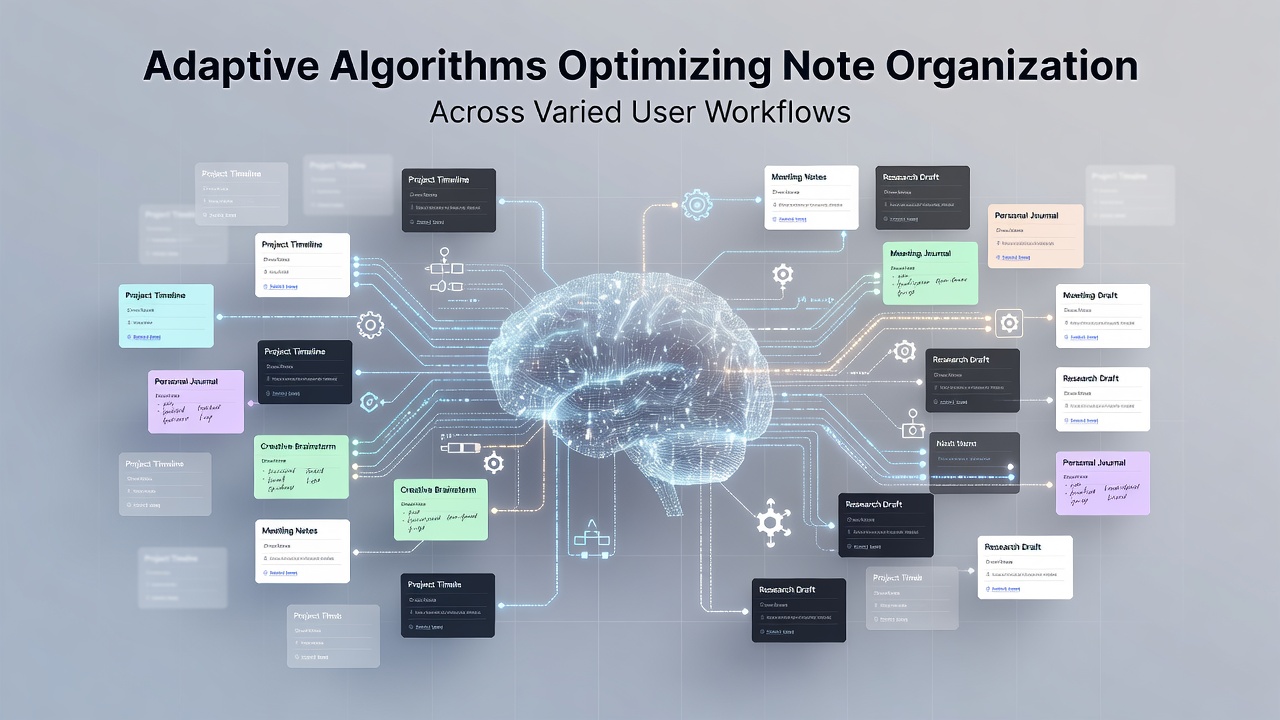
Adaptive algorithms have become central to note-taking platforms because they analyze user patterns and reorganize content without manual input. These systems track tagging habits, search frequency, and folder usage across sessions, then apply machine learning models to surface relevant notes at the right time. Data from platform telemetry shows that users who engage with algorithm-suggested structures reduce time spent on retrieval tasks by measurable margins compared with static folder systems.
The Mechanics Behind Adaptive Note Organization
At their core, adaptive algorithms combine clustering techniques with reinforcement learning loops. They process metadata such as creation dates, keyword density, and cross-note links, then adjust priority scores based on observed access patterns. Researchers at institutions tracking productivity software report that these models update every few hours when new notes enter the system, allowing the structure to shift gradually rather than through abrupt resets. The process relies on vector embeddings that convert text into numerical representations, which helps group related items even when users employ different vocabulary across projects.
Application Across Professional and Academic Workflows
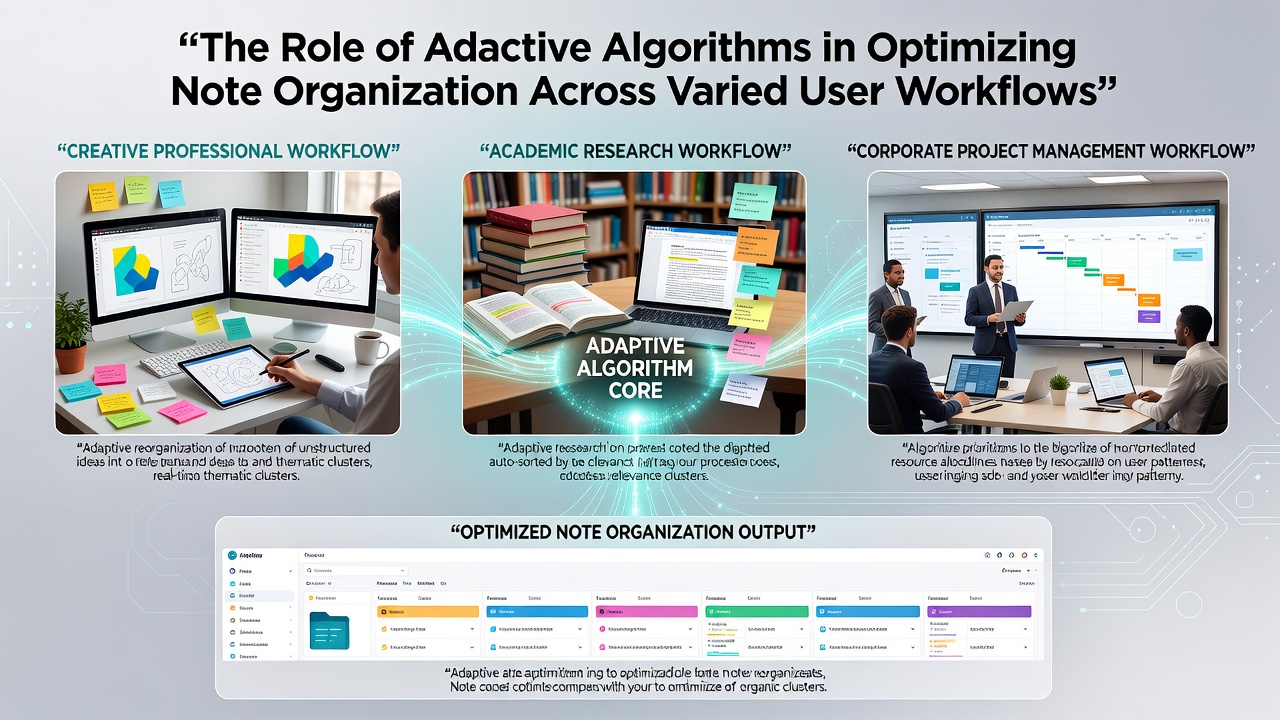
Professionals in consulting firms often maintain high volumes of client notes interspersed with internal memos. Adaptive systems in this setting prioritize recency and client identifiers, automatically surfacing previous project summaries during new client onboarding. Academic researchers, by contrast, generate notes tied to literature reviews and experimental logs. Here the algorithms emphasize citation networks and thematic clusters, creating dynamic bibliographies that evolve as new papers are added. Students balancing coursework across multiple subjects see algorithms that separate lecture notes from assignment drafts while linking related concepts across courses. Each workflow triggers distinct weighting in the underlying models, which explains why the same application can feel personalized without explicit configuration.
Studies conducted by teams at the MIT Computer Science and Artificial Intelligence Laboratory have documented how these adjustments affect retrieval speed in controlled trials. Participants using adaptive interfaces located specific notes faster than those restricted to manual search, with the gap widening as note counts exceeded several hundred entries. The findings align with observations from the Austrian Institute of Technology, where longitudinal data indicated sustained improvements in organization consistency after twelve weeks of algorithm-assisted use.
Integration with Device Synchronization and October 2026 Trends
Device synchronization adds another layer because algorithms must reconcile changes made on mobile, desktop, and web clients in near real time. Conflict resolution protocols now incorporate user-specific priorities, such as favoring the most recent edit from the primary work device. As of October 2026, several platforms have rolled out updates that incorporate contextual signals like calendar events and meeting transcripts to refine note suggestions further. These enhancements build on earlier versions by weighting location-based or time-of-day patterns when users consistently review certain notes during commutes or evening reviews.
Measured Outcomes in Multi-User Environments
Team workspaces introduce additional complexity because algorithms must balance individual preferences with shared structures. One documented approach involves creating hybrid categories that appear differently for each member while preserving a common core taxonomy. Usage statistics collected across enterprise deployments reveal that teams adopting these hybrid models report fewer duplicate notes and higher rates of cross-referencing between members. The algorithms achieve this by monitoring co-editing frequency and surfacing related content during collaborative sessions without requiring explicit shares.
Conclusion
Adaptive algorithms continue to reshape how notes move from raw capture to structured retrieval. Their effectiveness stems from continuous analysis of individual and group behaviors, which allows the same application to support contrasting workflows without separate code paths. Ongoing refinements in synchronization and contextual awareness, visible in releases around October 2026, suggest that future iterations will integrate even more external signals while maintaining user control over core organization rules.