Morgan Koch · 4 September 2026
Rebuilding User Engagement Through Strategic Content Adjustments Following Infrastructure Changes in Online Services
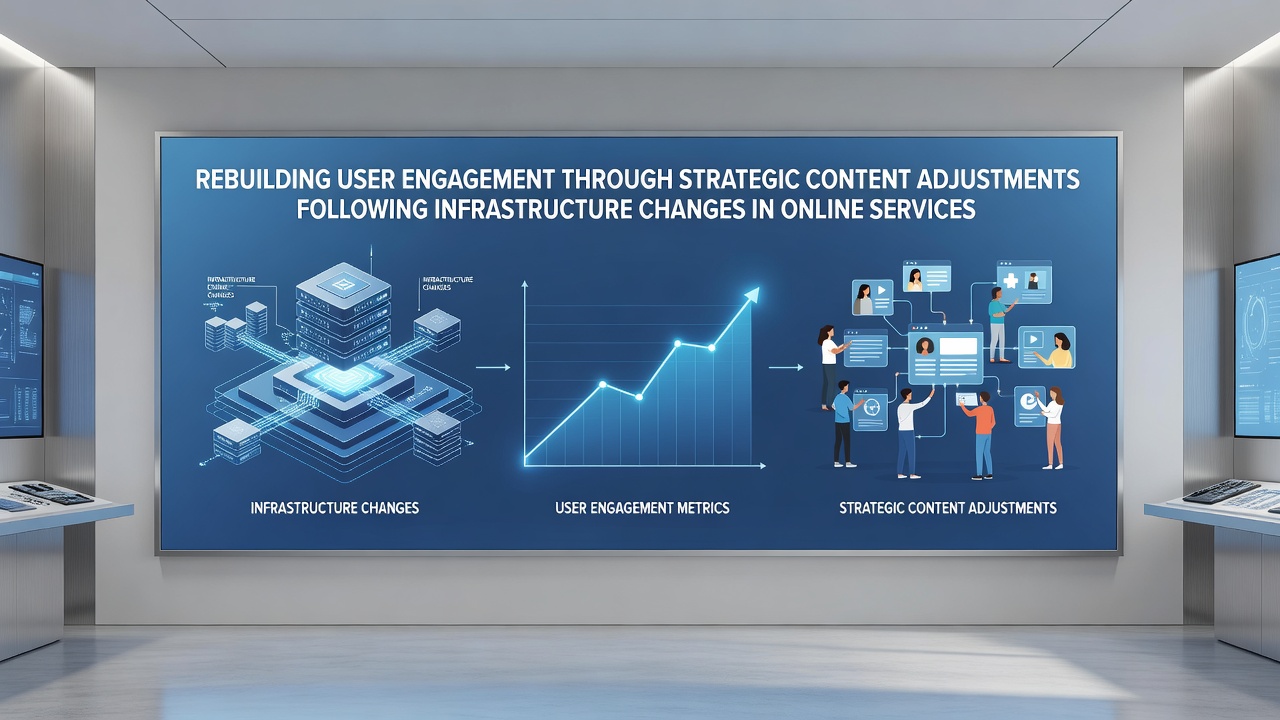
Online services frequently undergo infrastructure changes that include server migrations, cloud platform shifts, and backend system overhauls, and these modifications often disrupt established user patterns while creating temporary declines in engagement metrics such as session duration, page views per visit, and return rates. Research from multiple regions shows that companies implementing targeted content adjustments after such updates achieve measurable recovery within three to six months, with data indicating that content refreshes aligned to new navigation structures and performance capabilities play a central role in restoring interaction levels. Observers note that September 2026 marked a period when several major platforms completed large-scale infrastructure transitions, leading to documented drops in user retention that required immediate strategic responses in content presentation and organization.
Understanding the Effects of Infrastructure Updates on User Behavior
Infrastructure modifications in online environments alter loading speeds, search functionalities, and content delivery pathways, which in turn affect how visitors interact with available materials. Studies conducted by academic institutions across North America and Europe reveal that even brief increases in page load times after migrations correlate with higher bounce rates, while changes to URL structures can break existing bookmarks and reduce organic traffic flow. Those who track digital service performance report that users encountering unfamiliar layouts often reduce their time spent on sites by 20 to 40 percent during the initial adjustment phase, although recovery becomes possible once content teams realign materials to the updated technical framework.
Data collected through analytics platforms demonstrates that engagement metrics stabilize more quickly when content teams prioritize updates to core navigation elements and featured sections rather than leaving legacy pages unchanged. Experts at research organizations in Australia and Canada have documented similar patterns across e-commerce and subscription-based platforms, where content adjustments that incorporate new search indexing capabilities help restore visibility for previously prominent materials. The process requires careful mapping of old content pathways to new structures, ensuring that users can locate information without excessive clicks or confusion.
Developing Content Strategies After Technical Transitions
Strategic content adjustments begin with comprehensive audits that identify pages affected by infrastructure modifications, followed by revisions that emphasize clarity, relevance, and alignment with improved technical capacities. Organizations that succeed in this area typically refresh meta descriptions, update internal linking patterns, and introduce new sections that highlight enhanced features made available through the infrastructure upgrades. Figures from industry reports indicate that services applying these methods see session depth increase by an average of 15 to 25 percent within the first quarter after implementation.

Content teams often restructure information hierarchies to match new site architectures, placing high-value materials in prominent positions that match updated user flow patterns. According to analysis from the Pew Research Center, platforms that introduce contextual content blocks around newly optimized features experience faster recovery in repeat visit rates compared with those that maintain pre-migration content arrangements. Adjustments also include the addition of explanatory guides that address changes in service functionality, helping users adapt without frustration or disengagement.
Measuring Recovery Through Engagement Indicators
Recovery tracking relies on consistent monitoring of key performance indicators that include time on page, click-through rates on updated sections, and conversion events tied to refreshed content. Research indicates that services achieving sustained improvement combine quantitative metrics with qualitative feedback mechanisms such as user surveys conducted at regular intervals following infrastructure events. Data from European digital economy studies shows that platforms completing content adjustments by the end of 2026 reported stabilization in engagement levels that matched or exceeded pre-change benchmarks within four months.
Those responsible for ongoing optimization frequently test variations in content presentation to determine which formats best support the technical improvements delivered by infrastructure changes. Short-form updates paired with detailed resource pages tend to perform strongly when users seek quick answers within newly structured environments, while longer explanatory materials support deeper exploration once initial navigation confidence returns. Government statistical agencies in multiple countries have recorded parallel trends in digital service usage, confirming that coordinated content and technical strategies produce the most consistent engagement rebounds.
Conclusion
Infrastructure changes in online services create both challenges and opportunities for user engagement, with strategic content adjustments serving as the primary mechanism for restoring and enhancing interaction levels. Evidence from diverse sources across regions demonstrates that methodical audits, targeted revisions, and ongoing measurement enable platforms to recover and often improve upon prior performance. Services that integrate content planning with technical transitions position themselves to maintain stable engagement through future modifications, supported by the patterns observed in multiple documented cases through September 2026 and beyond.