Elena Keller · 13 November 2026
Data Portability Challenges Across Emerging Note Platforms During Enterprise Scale Transitions
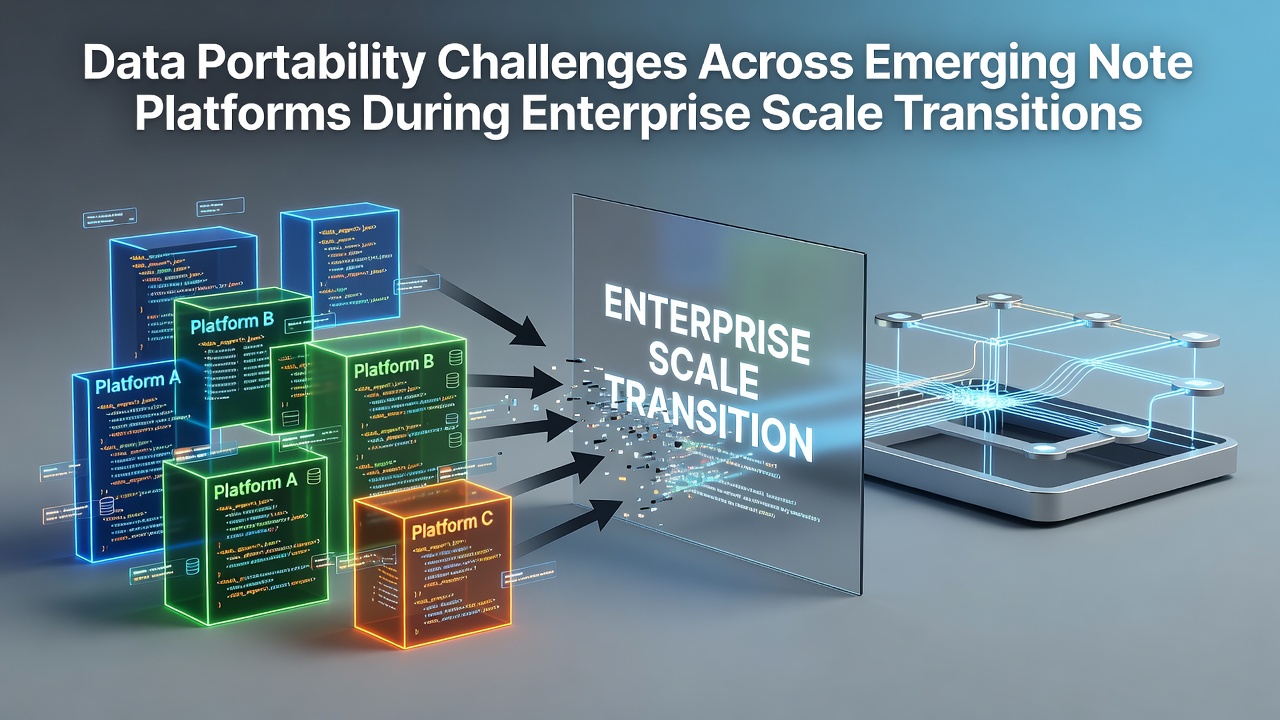
Enterprise organizations expanding their digital infrastructure encounter persistent obstacles when shifting note data between emerging platforms, and these issues intensify as user bases grow from hundreds to thousands across departments. Data portability requires seamless export and import processes yet many tools rely on proprietary structures that resist clean transfers, leading to incomplete records or formatting losses during migration projects.
Regulatory Pressures Shaping Data Movement
Legal frameworks in multiple regions now mandate greater user control over personal and organizational information, which directly affects how note platforms handle transfers at scale. According to guidelines from the European Data Protection Board, individuals and entities hold rights to receive data in structured, commonly used formats that support further use without hindrance. Similar expectations appear in Canadian privacy legislation through the Office of the Privacy Commissioner of Canada, where organizations must demonstrate feasible extraction methods during platform changes.
November 2026 marks an anticipated update cycle for several international standards on cross-border data flows, and companies preparing enterprise transitions have already begun auditing their note systems to align with these forthcoming requirements. Noncompliance risks fines and operational delays, so teams track these timelines closely while evaluating new platforms.
Technical Barriers in Large-Scale Transfers
Emerging note platforms often store content with layered metadata, tags, and relational links that exceed basic text or markdown capabilities, creating friction during bulk exports. When enterprises attempt to move thousands of entries at once, systems may throttle requests or truncate embedded attachments, forcing manual reconciliation afterward. Observers note that API rate limits and authentication protocols add further layers of complexity, especially when source and destination platforms use incompatible authentication schemes.
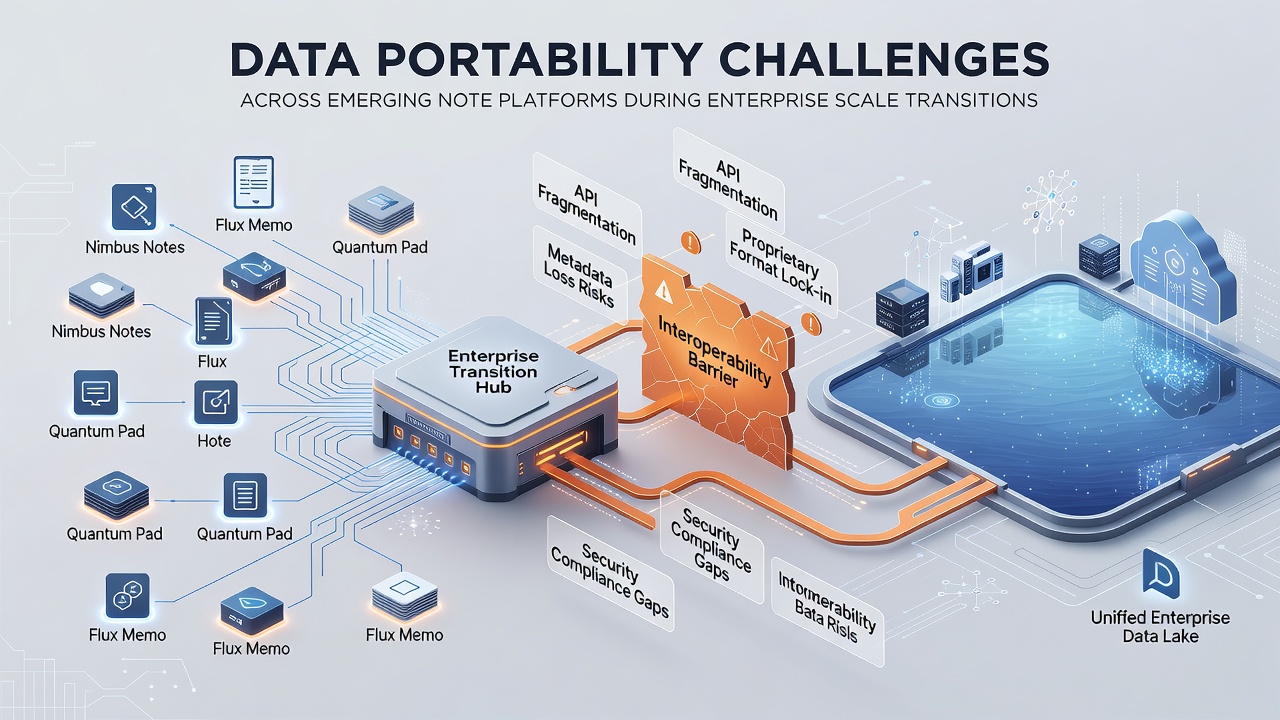
One documented case involved a multinational firm that spent weeks mapping custom fields from its legacy note system into a newer collaborative environment, only to discover that version histories failed to carry over intact. Researchers at institutions studying enterprise software migrations report similar patterns where timestamp inconsistencies and permission hierarchies break during automated processes, requiring custom scripting to restore functionality.
Enterprise Case Examples and Mitigation Approaches
Financial services groups and healthcare providers frequently manage sensitive annotations that demand strict access controls throughout any platform shift. These sectors test phased migration strategies, beginning with pilot groups before expanding to full departments, which allows identification of data integrity gaps early. Industry reports from organizations tracking SaaS adoption reveal that hybrid export methods combining API pulls with direct database queries sometimes reduce loss rates, although they increase project timelines and require specialized staff.
Another pattern emerges when teams integrate third-party validation tools to verify completeness post-transfer, and these utilities compare checksums across platforms to flag discrepancies. Such approaches prove useful in November 2026 contexts as more enterprises align their processes with updated compliance checklists ahead of regulatory reviews.
Conclusion
Enterprise scale transitions across note platforms continue to test the boundaries of current data portability mechanisms, and success depends on coordinated technical, legal, and procedural adjustments. Organizations that map their data structures in advance and monitor evolving regional rules position themselves to complete moves with fewer interruptions. As standards advance into late 2026, ongoing assessments of platform capabilities will determine how effectively these challenges resolve in practice.